

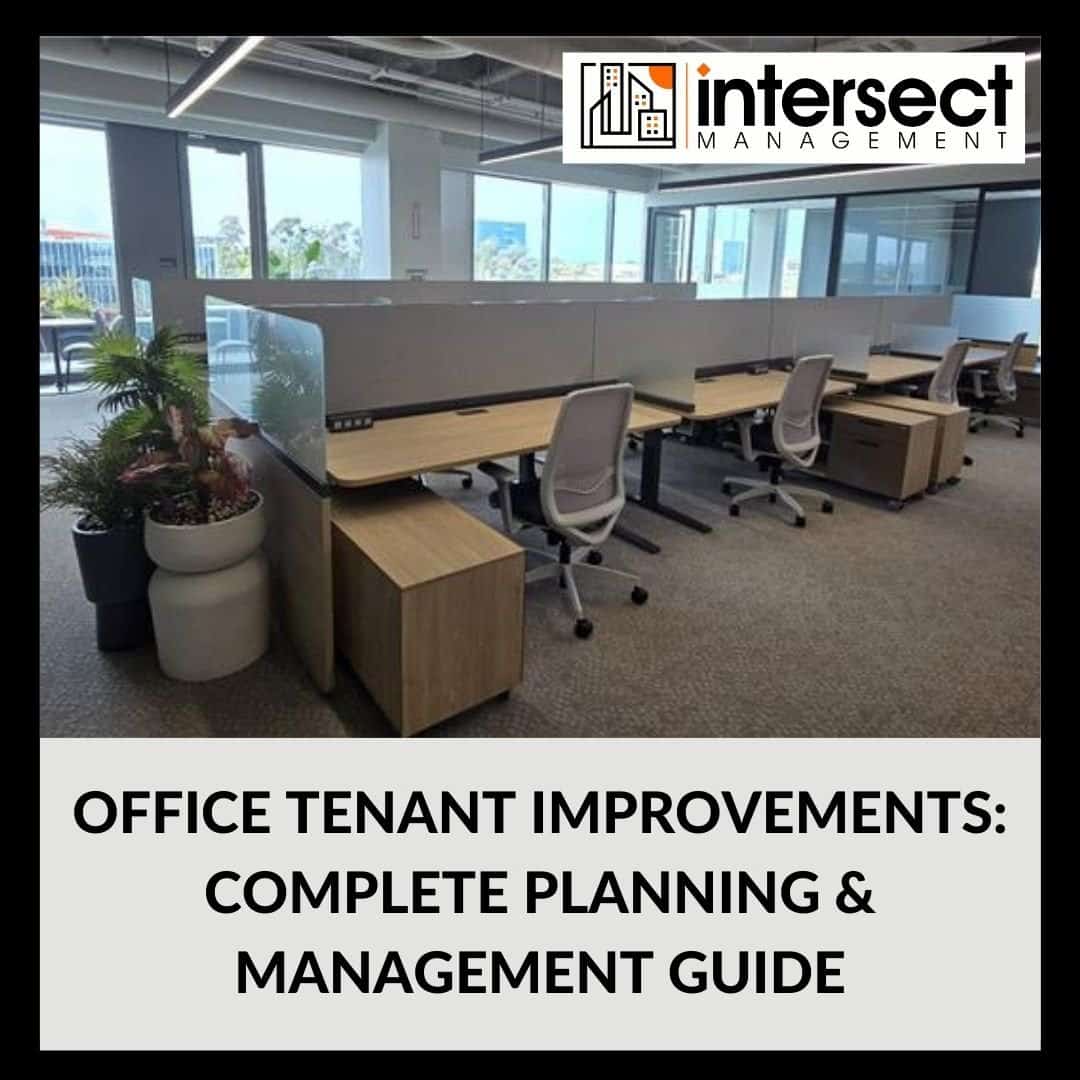
When your business is ready to expand, relocate, or refresh its workspace, office tenant improvements (TIs) represent one of the most significant investments you’ll make. Yet too many companies rush into TI projects without proper planning, only to face budget overruns, construction delays, and spaces that don’t quite meet their operational needs.
The difference between a successful tenant improvement and a costly headache often comes down to one critical factor: experienced project management from day one.
What Are Tenant Improvements, Really?
Tenant improvements are the customized modifications made to a rental space to accommodate a tenant’s specific business needs. These can range from simple cosmetic updates like fresh paint and new flooring to comprehensive renovations involving space reconfiguration, mechanical system upgrades, and specialized infrastructure installations.
For office tenants, TIs typically include partitioning for private offices and conference rooms, kitchen and breakroom installations, technology infrastructure, lighting and electrical work, HVAC modifications, and finishes that reflect your company’s brand and culture.
Why Most Tenant Improvement Projects Go Wrong
The reality is that many TI projects encounter problems that could have been avoided with proper planning and expert guidance. Common pitfalls include underestimating true project costs, failing to negotiate favorable lease work letters, poor coordination among landlords, architects, contractors, and tenants, inadequate timeline planning, scope creep during construction, and overlooking critical building code requirements.
These issues don’t just cause headaches—they directly impact your bottom line and can delay your ability to occupy and operate from your new space.
The Right Way: A Strategic Approach to Tenant Improvements
1. Start with Expert Owner’s Representation
Before you sign anything or break ground, bring in experienced project management professionals who can serve as your advocate throughout the entire process. At Intersect Management, this owner’s representation role means having someone in your corner who understands both the real estate and construction sides of the equation, ensuring your interests are protected at every stage.
A good owner’s representative helps you ask the right questions before committing to a space, identifies potential issues during site assessments, and ensures you’re making informed business decisions from the very beginning.
2. Master the Lease Work Letter Negotiation
One of the most overlooked yet critical phases of any TI project is negotiating the lease work letter. This document defines what the landlord will provide (the “vanilla shell” or base building improvements) versus what you’ll need to fund yourself.
Professional assistance during this phase can save you tens—or even hundreds—of thousands of dollars. Key areas to address include the tenant improvement allowance amount and restrictions, landlord versus tenant scope responsibilities, approval processes and timelines, allowable uses and modifications, and post-construction obligations.
Without expertise in this area, you may unknowingly agree to shoulder costs that could have been the landlord’s responsibility.
3. Conduct Thorough Feasibility Analysis and Due Diligence
Before committing to a space, comprehensive feasibility analysis is essential. This includes evaluating whether the existing infrastructure can support your operational requirements, analyzing the true cost to make the space functional for your needs, assessing timeline feasibility against your occupancy deadline, identifying potential code compliance issues, and understanding utility capacity and upgrade requirements.
This due diligence phase often reveals deal-breakers that aren’t apparent during initial site tours. It’s far better to discover these issues before signing a lease than after you’re locked in.
4. Develop a Comprehensive Project Plan
Once you’ve committed to the space, detailed planning becomes critical. A robust project setup includes clear budget development with contingencies, realistic timeline creation with milestones, scope definition and documentation, risk identification and mitigation strategies, team assembly (architects, engineers, contractors), and communication protocols among all stakeholders.
At Intersect Management, the project planning phase is where the foundation for success is established, ensuring everyone involved understands the objectives, constraints, and expectations.
5. Maintain Rigorous Design Oversight
During the design phase, experienced oversight ensures that your architect’s plans actually align with your operational needs and budget. This isn’t about micromanaging designers—it’s about making sure that design intent translates into practical, buildable, and budget-conscious solutions.
Design oversight includes reviewing plans for functionality and code compliance, value management to optimize costs without sacrificing quality, coordinating with engineers on MEP systems, ensuring designs work within your budget, and managing the landlord approval process.
6. Implement Strategic Procurement and Construction Management
When it’s time to select contractors and begin construction, expert management becomes even more critical. Professional procurement supervision helps you evaluate bids fairly, select the right subcontractors for each job, identify potential issues in contractor proposals, negotiate favorable terms, and ensure you’re comparing apples to apples.
During construction, active construction management means daily oversight of work quality and progress, coordination among multiple trades, management of change orders and scope modifications, quality control inspections, safety compliance, and keeping the project on schedule and budget.
7. Navigate the Complexities with Specialized Expertise
Different types of office improvements require different expertise. Whether you’re building out a standard corporate office, creating specialized spaces like a clinical laboratory, or incorporating sustainable and intelligent building features, having project managers who understand the unique requirements of your industry makes all the difference.
The Intersect Management Difference
What sets Intersect Management apart in the tenant improvement space is their comprehensive, client-first approach. They’re not just managing schedules and budgets—they’re facilitating projects from inception to full closeout with a focus on long-term client success.
Their team brings varied skill sets and considerable experience across multiple project types, from ground-up construction to tenant improvements in corporate offices, life science laboratories, mission-critical facilities, healthcare, and more. This breadth of experience means they’ve likely encountered—and solved—problems similar to yours before.
Perhaps most importantly, Intersect Management approaches project execution deliberately and collaboratively. They understand that their job isn’t done unless they meet or exceed client expectations. This philosophy shapes every decision they make and every relationship they build.
Key Services That Make the Difference
Throughout a tenant improvement project, Intersect Management provides:
-
Owner’s representation to protect your interests
-
Feasibility analysis and due diligence before you commit
-
Lease work letter negotiation assistance to maximize your TI allowance
-
Comprehensive project setup and planning
-
Risk planning and mitigation strategies
-
Project accounting and budget management
-
Design oversight to ensure plans meet your needs
-
Procurement supervision for contractor selection
-
Construction management from groundbreaking to closeout
This comprehensive approach means you have one trusted partner guiding you through the entire process, rather than trying to coordinate multiple consultants or going it alone.
Real-World Impact: What Proper Management Delivers
When tenant improvements are managed correctly from the start, the results speak for themselves:
-
Projects completed on time and within budget
-
Spaces that truly support your operational needs
-
Minimized business disruption during construction
-
Optimized tenant improvement allowances
-
Avoided costly mistakes and change orders
-
Seamless coordination among all project stakeholders
-
A move-in-ready space that your team actually wants to work in
More importantly, proper project management gives you peace of mind. Instead of losing sleep over construction issues, you can focus on running your business, confident that experienced professionals are handling the complexities of your build-out.
The Bottom Line: Expertise Pays for Itself
Some companies view professional project management as an added expense. In reality, it’s an investment that typically pays for itself many times over through avoided mistakes, optimized negotiations, and efficient execution.
Consider the cost of just one major error: a design that doesn’t meet code requirements discovered mid-construction, a mechanical system that’s undersized for your needs, or a poorly negotiated work letter that leaves you covering costs that should have been the landlord’s responsibility. Any one of these issues could cost more than professional management fees—and they’re entirely preventable with the right expertise in place.
Getting Started the Right Way
If you’re considering an office tenant improvement—whether it’s a small refresh or a complete build-out—the time to bring in expert project management is now: before you sign a lease, before you commit to a space, and definitely before construction begins.
Intersect Management has built their reputation on helping clients navigate these complex projects successfully. Their approach minimizes risk while maximizing outcomes, ensuring you make informed business decisions every step of the way.
Don’t let your tenant improvement become a cautionary tale. Do it right the first time with experienced professionals who care about your long-term success as much as you do.
Ready to discuss your tenant improvement project?
Contact Intersect Management today:
📞 858-251-4544
📧 info@IntersectManagement.com
🌐 intersectmanagement.com
With offices in San Diego and expertise serving clients nationwide, Intersect Management brings the project management and commercial real estate consulting experience you need to turn your office vision into reality—on time, on budget, and done right.
– By Jason Helms
