
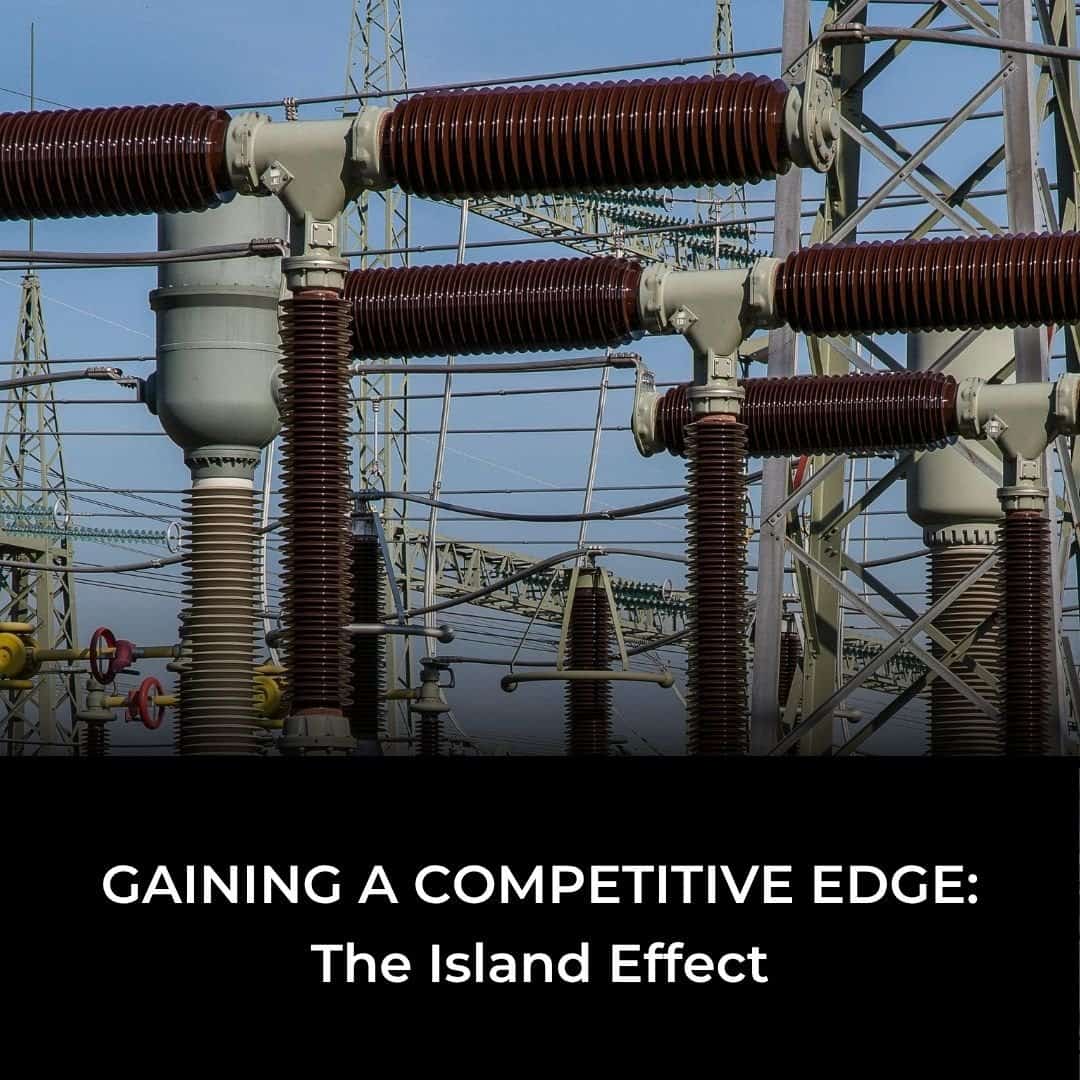
Why isn’t San Diego a hub for data centers, especially given the region’s concentration of technology and life sciences leaders with massive data transfer and storage demands driven by AI and machine learning? The answer is neither hidden nor complicated: power cost and availability.
Commercial electricity rates in San Diego County range from $0.39–$0.40 per kWh, and businesses operating locally know that peak demand premiums can push effective rates even higher. These figures place the region at the top of the U.S. cost curve.
By contrast, Abilene, where Crusoe is developing a 1GW+ hyperscale data center, offers high-load industrial users rates around $0.0557 per kWh. That stable and predictable pricing is enabled by a deregulated, competitive, lower-cost energy market. Simply put, San Diego cannot currently compete with that environment.
Even compared with the national commercial average of $0.14 per kWh, San Diego customers pay roughly 35% more. With that scale of disparity, it is unrealistic to expect the region to emerge as a data-center hotspot without significant changes in state-level utility regulation and a more diversified power-generation ecosystem.
Capacity Constraints Are the Other Barrier
Cost is only part of the equation. Grid capacity is equally limiting. Utilities nationwide are struggling to keep up with demand, particularly in regions with dense data-center clusters. Yet even in San Diego—without such clusters—the grid is already strained. This is not just a data-center issue; it is a regional infrastructure challenge, and current trends suggest little relief in the near term.
The Growing Energy Demand Problem
San Diego is a global R&D hub for organizations such as Novartis, Eli Lilly, Pfizer, Bristol Myers Squibb, Illumina, Apple, Qualcomm, and Amazon, alongside major defense manufacturers and engineering firms. Each of these organizations faces the same fundamental question: how can rising energy demand be met—particularly in the AI era?
If the region cannot support that demand, companies may slow expansion or shift investment elsewhere. When that happens, San Diego loses both economic momentum and competitive advantage.
A Viable Path Forward: Power Islands
One promising solution is the power island: a self-sustaining, grid-independent energy system designed to eliminate exposure to outages and capacity limitations. These systems can incorporate natural-gas turbines, fuel cells, generators, advanced battery storage, and even waste-to-hydrogen conversion technologies already deployable today. While small modular nuclear reactors are gaining global traction, regulatory approval timelines suggest they remain 5–10 years away from practical deployment.
Recognizing this opportunity, Intersect Management is partnering with providers to deliver turnkey power-island solutions, including modular, scalable data-center units in the 1MW–3MW range. These fully integrated systems can be deployed externally on available site area, preserving interior real estate and accelerating speed to market.
Many industry professionals already know Intersect for its deep mission-critical project management expertise. This next step expands that value proposition: not just identifying systemic regional challenges, but delivering practical, scalable solutions that strengthen the broader innovation ecosystem.
– By Mike Barbera
